
A few weeks ago, the British government launched a new campaign called “Be Ready”. The program encourages households to keep three days’ worth of non-perishable food and drinking water, along with candles and other basic supplies, on hand in case of emergencies, extended power outages, unexpected shortages, natural disasters, and more. The campaign recommends building supplies gradually, choosing foods you truly enjoy, and checking your cupboard before buying more.
The campaign made international news and caused a tremor of concern about why, exactly, such a campaign was suddenly necessary.
Do they know something we don’t know? Was this a warning?
The advice itself seems so out of step with modern life that it feels odd and deeply uncomfortable. For many of us today, the idea that one would need reserves seemed to come out of left field.
I live in an area that can be affected by tropical storms. I am accustomed to hearing the advice to keep three days’ worth of food and water on hand. That being said, this advice surfaces in May and disappears in November. No one suggests I maintain these reserves year round.
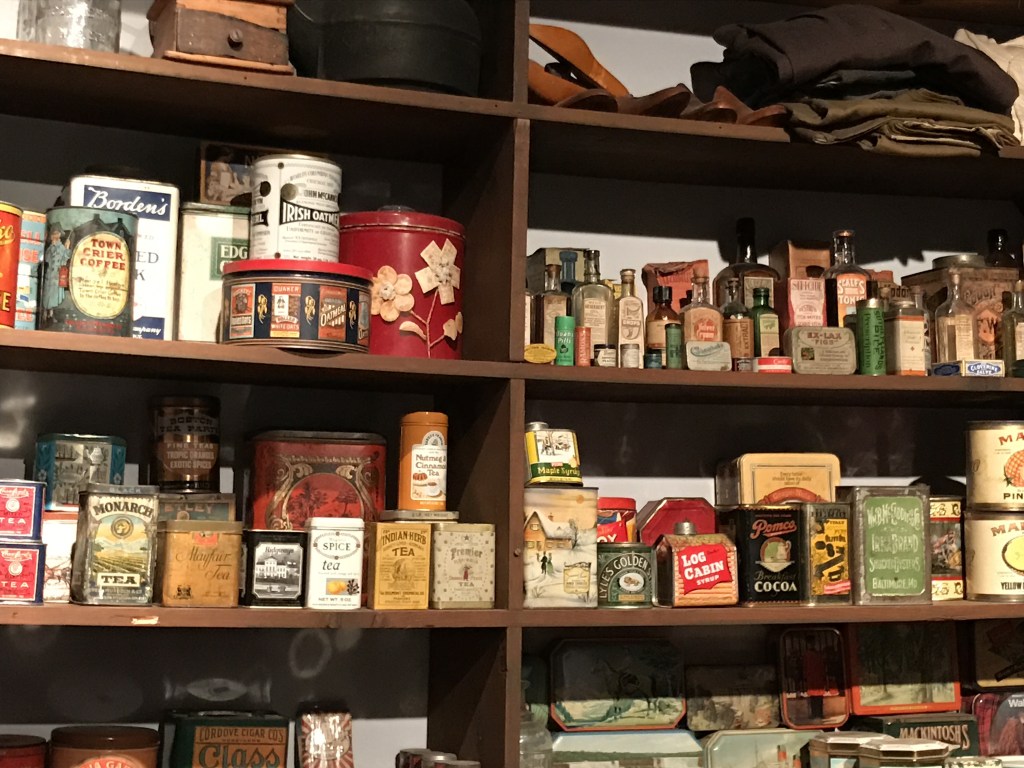
Yet for generations, keeping a well stocked pantry wasn’t considered an extraordinary precaution. It was simply how a household was run.
Preparation, once an incredibly ordinary part of household management – and frankly, just good common sense – has been rebranded as a subculture for extreme survivalists and conspiracy theorists, or reduced to a temporary inconvenience to get through storm season.
And honestly, in this day and age, why SHOULD we feel the need to prepare? Groceries can be ordered from just about any store and delivered to your doorstep in less than an hour. The store doesn’t have exactly what you want? There’s usually at least two or three substitutes. Chef prepared meals can be purchased through a subscription. Heck, you can even get supplies delivered via drone in some parts of the country.
In our modern-day defense, the store or the warehouse acts very much like the old home cupboard. Except for the Great Toilet Paper Shortage of 2020, most of us alive today have never experienced significant shortages of everyday necessities. We don’t maintain supplies because we usually don’t have to.
That being said, by relying so heavily on just-in-time logistics and our complex modern supply chains, we’ve mistaken constant access for permanent security. We’ve gradually lost the habit of sensible preparation.
Back in the 1940s, however, household preparedness was rarely given a second thought. Most adults had lived through the Great Depression and had learned the value of thrift and keeping a reserve. Once the war began, careful planning and resourcefulness became that much more important. One never knew when, or if, they would be able to buy certain supplies.
And those supplies? They carried their weight. They were stretched, transformed, used up, and repaired. Nothing went to waste. Folks kept things like flour, sugar, dried beans, canned goods, coffee, and tea on hand because they understood that a trip to the market wasn’t guaranteed to produce what they wanted or even needed.
A well-stocked cupboard required considered thought. Knowing how best to use your supplies and adapt if circumstances changed was just as important as what you actually had on hand. It meant storing ingredients that could be used in more than one way and knowing how to prepare them without relying on a recipe. It meant thinking beyond what you wanted for dinner tonight and considering what you might need tomorrow, or next week.
That thoughtfulness is perhaps the biggest difference between then and now. Much like our overstuffed wardrobes, filled with clothes that somehow still leave us thinking “I have nothing to wear,” our pantries are often a mishmash of impulse buys, dusty cans, sale items our families won’t eat, and random ingredients that are difficult to turn into an actual meal. And when a situation arises that requires us to stock up, we often panic-buy without much thought.
I can’t count the number of times I’ve been at the grocery store ahead of an approaching storm and watched people load their carts with milk, dried pasta, and other foods that may be of little use if the power goes out.
And therein lies the heart of the problem: our reliance on immediate consumption has gradually allowed us to forget the practicalities our grandparents inherently understood. When an emergency threatens our access to the grocery store, we don’t consider what we might be able to make, stretch, or adapt – in many cases because our pantries aren’t well curated.
The British government’s “Be Ready” campaign didn’t feel scary because the advice was radical. It was uncomfortable because it held up a mirror to our fragility, and asked us to reclaim an everyday habit we long ago surrendered to the illusion of stability.
So, where do we go from here? How do we build a realistic reserve of supplies without spending a fortune?
Start with what you already like to eat. During an emergency or time of stress, having food that you know you enjoy will bring comfort.
Build gradually. Consider what you would need for nine meals, potentially assembled without power – three breakfasts, three luncheons, three dinners. Each time you go to the store, add a can or jar.
Think about versatility and choose foods that can be transformed into multiple dishes.
Use and replenish. A 1940s pantry wasn’t an emergency stash or a huge stockpile – it was an active participant in the daily household and required no electricity to turn simple, shelf-stable foods into satisfying meals. The current advice is to have 3 days of food on hand.
Here’s what we can make with less than two dozen pantry items (not including condiments):
| MEAL | PANTRY ITEMS | END RESULT |
| Breakfast #1 | Rolled oats, shelf stable milk, canned peaches | Overnight peach oatmeal |
| Breakfast #2 | Canned white beans, olive oil, salt, pepper, crisp bread | Savory breakfast beans on toast |
| Breakfast #3 | Rolled oats, raisins, nuts, shelf stable milk | Muesli |
| Lunch #1 | Canned tuna, white beans, olive oil, crispbread | Tuna and white bean salad on toast |
| Lunch #2 | Canned three-bean salad, corn, diced tomatoes, chili powder | Vegetarian chili |
| Lunch #3 | Canned chicken, raisins, nuts, olive oil | Chicken salad |
| Dinner #1 | Canned salmon, white beans, canned potatoes, green beans, mustard | Salmon with potato salad |
| Dinner #2 | Canned chicken, mixed veggies, poultry seasoning | Chicken stew |
| Dinner #3 | Canned corned beef, canned potatoes, sauerkraut | Corned beef and cabbage |
None of these meals requires an elaborate recipe or specialty ingredients. They’re made from ordinary foods that can be stored for months, combined in different ways, eaten hot or cold, and even provide relatively decent nutrition.
So, perhaps the British “Be Ready” campaign was a good reminder: we’ve become too comfortable with the assumption that everything will always be there when we want it.
Preparation doesn’t have to look like a garage filled with buckets upon buckets of dehydrated food with a 40-year shelf life. It can look exactly like it did in our grandparents’ day: a modest supply of ordinary food, used and replenished, and ready for when the unexpected happens.

