
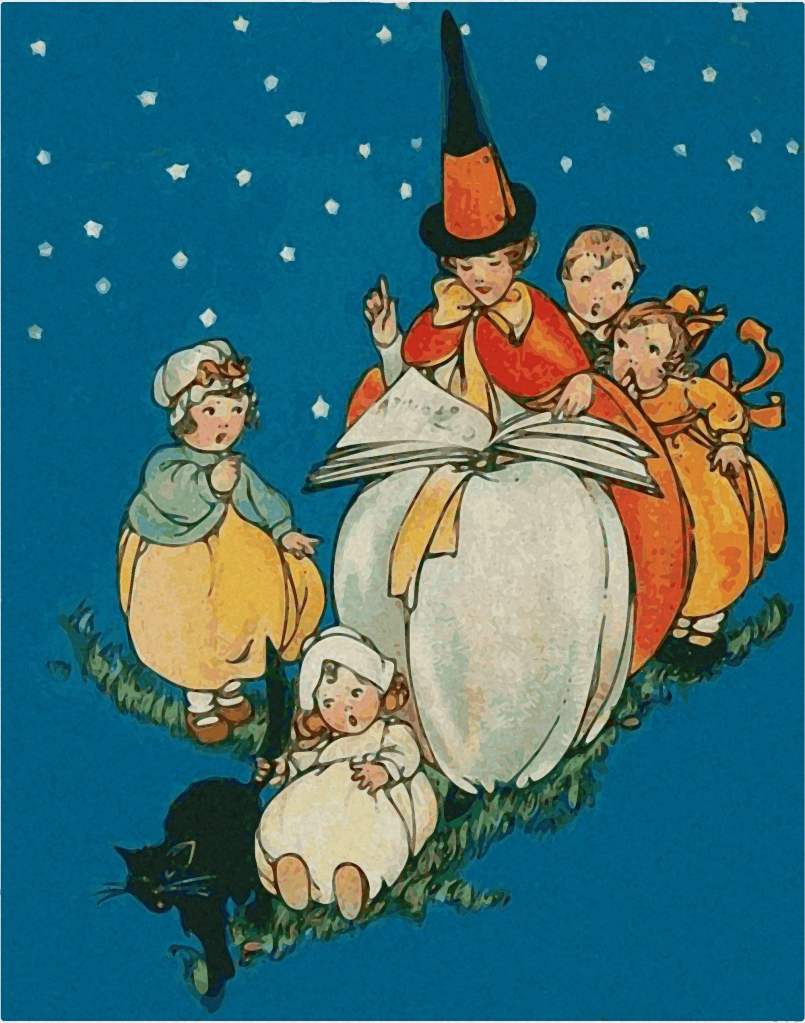
Trick or treat!
Halloween is supposed to be a fun time of year, filled with little ghosts and goblins and spooks for those who enjoy a little fright. Back in the war years, Halloween was celebrated, like most things in those days, as a modest community event. Sugar was rationed, of course, so treats often included homemade delights such as popcorn balls, apples, molasses cookies, and cups of apple cider. Costumes were made at home, oftentimes with old sheets and tablecloths, and decor typically meant pumpkins, dried corn, paper chains, and little die-cut cardstock black cats.
Fast forward 80-plus years and Halloween has gone from a charming, wholesome event to a commercial juggernaut.
In 2026, US consumer spending on Halloween is projected to hit $13.5 billion. Yes, you read that correctly. Billion with a B. How, exactly, does a nation spend $13.5 billion dollars on a holiday that lasts one night?
Glad you asked.
According to the National Retail Federation, Americans are expected to spend around $4.4 billion on costumes ($920 million alone on pet costumes), $4.3 billion on decorations, $800 million on greeting cards, and $4.1 billion on candy.
Ah, candy. Truly, the scariest part of modern Halloween celebrations.
Somewhere along the way, Halloween became less about homemade fun and more about buying the right stuff. And then, there was the candy scare.
By the end of the 1970s, sensationalized stories (taken out of context) about poisoned treats and razor blades took hold in the public imagination. Widespread paranoia set in and the trick-or-treating public was convinced: evildoing strangers were lacing homemade treats with poison, inserting needles into apples, and hiding razor blades in unwrapped treats.
We collectively decided we could no longer trust each other and the era of homemade cookies, ooey gooey candy apples, and warm buttery popcorn balls vanished seemingly overnight.
To protect our children, we handed over our trust to corporate America. Only factory sealed, mass manufactured individually wrapped candy was safe enough to eat. After being taken to the hospital for a requisite trip through the x-ray machine, of course.
Factory sealed candy was the only safe option. Or so we told ourselves.
Half a century later, we need to ask ourselves…was this really the right move?
If you want a true scare this Halloween, skip the haunted house and scary movie and take a closer look at the ingredients on the average bag of store-bought Halloween candy.
To keep candy shelf stable for months – let’s be honest, years – and highly palatable, manufacturers add all manner of ingredients you most certainly do not have in your kitchen. Things like polyglycerol polyricinoleate, sulfur dioxide, hydrogenated oils, and the now standard artificial colors and flavors. One of the most popular candies on the market has 27 different ingredients. And that’s just the stuff that’s ON the label.
What’s not on the label? Be prepared for a Halloween trick you never expected. Multiple independent studies have found that some of the most popular candies on the market contain heavy metals like lead, cadmium, and even arsenic. (In the interest of fairness, the arsenic specific study is disputed by some industry leaders and was not peer-reviewed. Do your own research if this is something that matters to you, and make your decision about consuming these foods based on your own beliefs.)
Oh, the irony.
We panicked for decades over a mythical threat – that strangers were poisoning apples, while we willingly fed ourselves the “safer” alternative – chemical stabilizers, waxy oils, and artificial everything. We traded trust in our neighbors for a factory seal. For a so-called treat that doesn’t even taste like real food.
At this point, you’re probably asking yourself “What does any of this have to do with life in the 1940s?”
Everything, as it turns out.
In October, 1944 Halloween celebrants had to make do with what was available. Sugar was strictly rationed, commercially prepared chocolate was earmarked for the troops, and using up what was in your pantry wasn’t a lifestyle trend or budget hack. It was just the way folks cooked.
If you wanted a Halloween treat, you made it yourself with what you had on hand.
So, in honor of the old-fashioned Halloween spirit, I dusted off my 1944 Good Housekeeping cookbook and whipped up a batch of Peanut Creams.
Surprisingly, the recipe didn’t include any unpronounceable ingredients. Just brown sugar, butter, peanuts, salt, and water.
While the recipe was quite easy to follow, I don’t have a candy thermometer so I tried to eyeball the cooking process. It didn’t go great…the candy didn’t quite set up properly so I ended up putting it in the freezer. Nonetheless, it was still delicious. The Mister said it tasted like a candy that may or may not rhyme with mayday.
It was rich, it was dense, it was nutty. And unlike the “safe” candy in the individual plastic wrappers, just one tiny piece was enough to satisfy a sweet tooth all day. Everything a treat like this should be.
I would definitely make this again. And while, sadly, the days when you could make this treat and give it out on Halloween are gone for good, Peanut Creams would make a lovely, nostalgic addition to any Halloween gathering where real food is still appreciated.
This one is a definite treat, and not a trick.
Peanut Creams
Ingredients
- 2 c. light brown sugar, firmly packed
- 3/4 c. hot water
- pinch of salt
- 1 c. shelled peanuts
- 3 tablesp. butter
Directions
Combine the sugar, water, and salt in a saucepan and stir over low heat until the sugar is dissolved. Cook gently to 236 F, or until a little of the mixture dropped in cold water forms a soft ball. Remove the heat, and cool to 110 or until the candy is lukewarm. Meanwhile, coarsely chop the peanuts and brown with the butter in a hot oven of 450 F for 8-10 min. Add the peanuts and any butter left in the pan to the cooled candy mixture and beat with a spoon or electric beater at medium speed until the mixture loses its gloss and a small amount dropped from a spoon holds its shape. Turn into a lightly greased or oiled pan, 9″ x 5″ x 3″, and when cool, cut into squares. Makes about 1lb.Unless you are an experienced candy maker, I highly recommend using a candy thermometer for best results.
Bon appetit!

