1940's · Fashion · Sears, Roebuck and Co · Style

40’s Fashion – Shoes Made for Comfort

The first time I saw it, my exact thought was “Dear God, WHAT is THAT?!?!” I was aghast. Just completely gobsmacked. I had never, in my entire life, seen such a hideous shoe on a female foot. Or a male foot. Or ANY foot. I am referring to the foot covering that I have since learned is called a “Bubble Shoe”. I thought Crocs and Uggs were bad, but these? Even a thorough search of my trusty thesaurus fails to uncover a synonym for ugly that adequately describes these things (I refuse to call them a shoe). 

Of course, I thought the young woman wearing them just had terrible taste. I felt badly for her that she had spent money on something so dreadful. Then I saw them again at the grocery store. And again at the doctor’s office. And again in a fairly nice department store. 

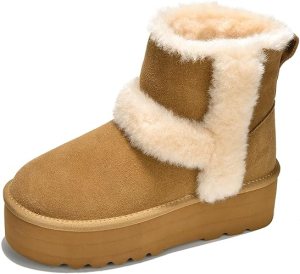
If you have no idea what a Bubble Shoe is, I apologize profusely but I am about to assault your eyeballs. Behold, I bring you the incredibly popular Bubble Shoe: 

I’ll give you a moment to absorb that. I sincerely hope you don’t have nightmares tonight.

What, exactly, is the point of these shoe-like objects? It can’t be fashion. Or function (what are you going to do in THAT?). 

Reading online reviews, the comments all have a common denominator: comfort. 

“Feels like a massage when you walk.”

“Most comfortable shoes I’ve ever worn in my life.”

“Like heaven on my feet.”

Ah, comfort. One must always be comfortable in the year 2023. Comfort at all costs, including pride in one’s appearance, seems to be the name of the game these days.

That being said, women have always wanted to be comfortable. No woman in her right mind goes to the store and deliberately chooses a shoe that is uncomfortable. But, back in the day, there was an understanding that a gal could be comfortable and still put her best foot forward, fashion-wise.

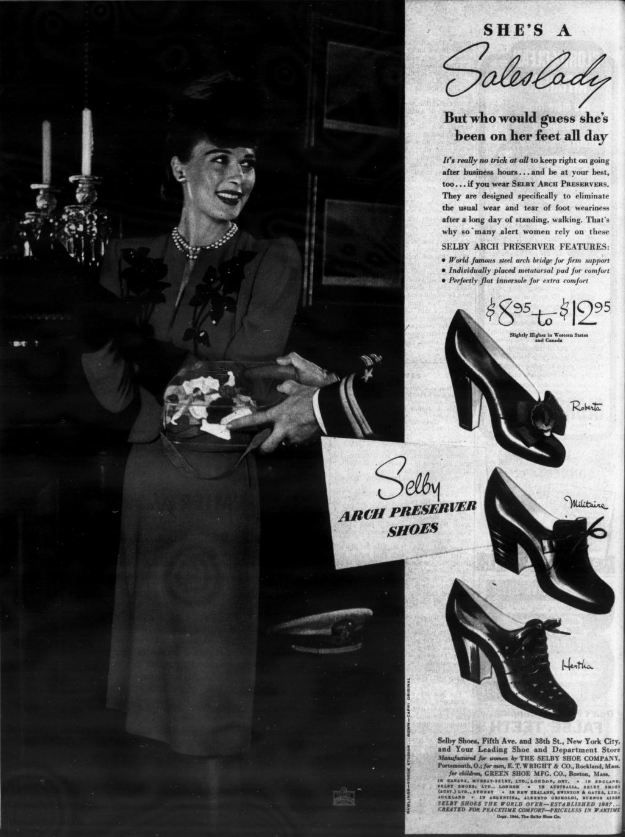
Look at this advertisement from the November 1944 issue of Ladies Home Journal:

Selby Arch Preserver Shoes. “Designed specifically to eliminate the usual wear and tear of foot weariness after a long day of standing, walking.” Sounds pretty comfortable to me.

And those features they tout? Steel arch bridge for support? Metatarsal pad for comfort? Flat innersole for extra comfort? All of those features indicate a very well made and thoughtfully designed shoe. Can plastic bubble foot coverings say any of that? I should think not.

Lest you think all ladies in the 40’s ran around in heels constantly, I found advertisement after advertisement promoting all manner of shoes like loafers, oxfords, moccasins, walking shoes, sandals, etc that are practical, sturdy, made for comfort, and stylish. Moreover, these shoes were made to last and not be thrown out on the whim of the latest fast fashion trend. 

In fact, the venerable Sears, Roebuck and Co catalog from Fall and Winter, 1944-45 offers an excellent selection of comfortable shoes. 

If you had to choose, what would you pick?

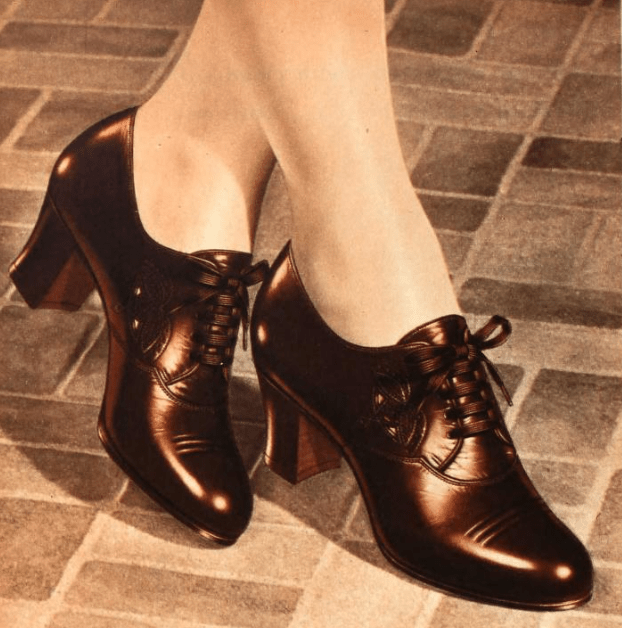
Would you rather “coddle your feet with resilient pillow soft cushions” in this:

Or this:

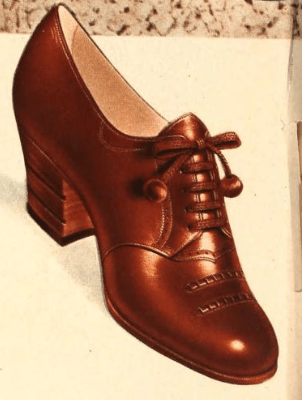
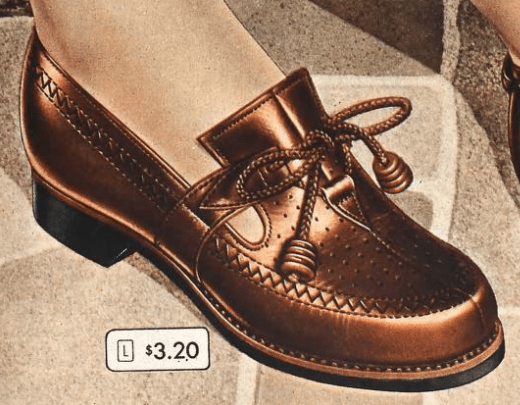
Would you rather enjoy “active walking and exceptional foot comfort” in this:

Or this:

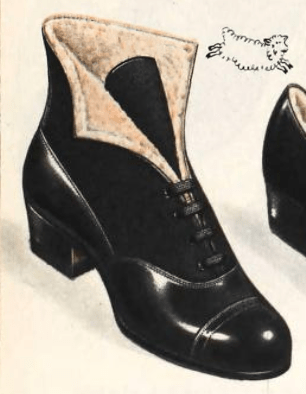
Would you prefer to “keep your feet cozy in coldest weather” in this:

Or, this:

Hard decision? Not for me…I know what I would choose and it’s the shoe that makes me look taller, more slender, and more feminine. I certainly would not choose a shoe that makes me look as if I stepped into a bucket of sticky golf balls or inserted my foot up a sheep’s backside. 

Western civilization (and believe me, I use that term loosely), is wealthier than ever before in history with more technology at our fingertips. We know how to make comfortable shoes. We have limitless creativity to design comfortable shoes that still look elegant. And we have the capability to mass produce stylish, comfortable shoes at affordable prices. So why, WHY, do we see women on the streets, in the shops, and at work wearing shoes that look like a wayward piece to a bad homemade Halloween costume?

Let’s bring back elegant, comfortable shoes. And, more importantly, let’s bring back the desire to wear them in the first place. 

À l’élégance!

1944 · main dishes · vintage recipes

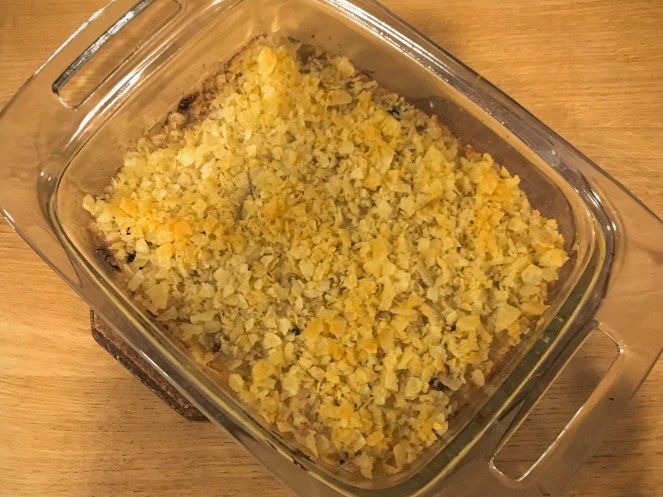
Vintage Recipe: Beef Upside-Down Pie

Well, I guess the old expression is true: two outta three ain’t bad.

My first two endeavors with 1944 cooking were extremely successful. The Swiss Cheese Pie was superb (although, update: the leftovers do not keep well) and the Baked Bean and Hamburger Savory was delectable. So to say I had high hopes for round three, Beef Upside-Down Pie, would be an understatement. Better luck next time, it seems.

First off, I must start by saying that I have made much worse dishes. Much. Oh the stories my poor family could tell about beet soup, tofu, and my now infamous “90 alarm chili” (turns out a few tablespoons of cayenne pepper is slightly too much. Oops). Thank goodness Beef Upside-Down Pie was not even close to those culinary disasters. In fact, the dish really wasn’t even bad. It just wasn’t great. 

That being said, Beef Upside-Down Pie was created with a very specific purpose in mind and it more than checked the box. 

This recipe was located within a section of the 1944 Good Housekeeping Cook Book entitled “Making Beef Go Farther” and gave the hint of combining meat with vegetables, rice, and breadstuff when meat is scarce. As meat was on the list of rationed foods in the United States from March of 1943 through November of 1945, these types of recipes were common in cookbooks and women’s magazines during the war years. Red stamps from Ration Book Two were used to purchase meat during this time and those over the age of 12 were allowed 2.5 pounds of meat a week. That means, in my household of three adults, we would be allotted 7.5 pounds of meat every 7 days. This recipe for Beef Upside-Down Pie called for just 1/2 of a pound of ground beef and served 4. 

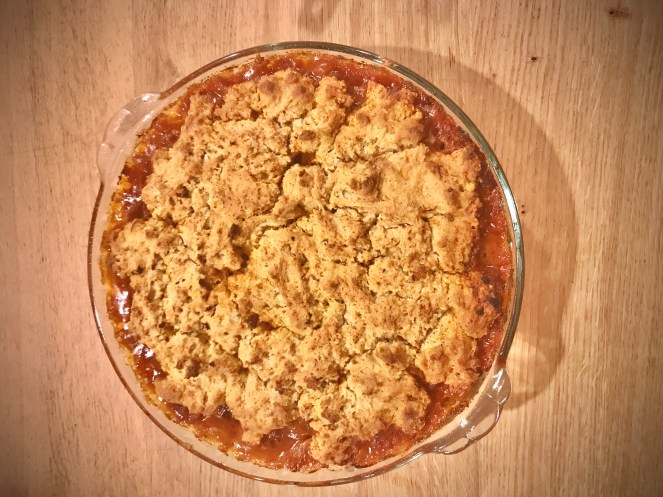
Successful in stretching the meat ration? Absolutely. But taste? Well, the very component that allowed me to use so little meat was what made the recipe less tasty than it could have been and that was… the biscuit. 

The Mister, my Maman, and I all agreed that the biscuit was much too dry and there was way too much of it. In fact, we all came to the same conclusion: that the meat portion of the dish was quite good but the flavor was totally overwhelmed by the dryness and sheer volume of the biscuit. My husband commented that the “meat is good, when you can find it underneath all the bread.” 

While I was preparing the biscuit dough, I did take note of the amount of baking powder used and expected it to rise a fair amount, but three inches? Well, butter my biscuit. That was the equivalent of a small loaf of bread on top of a hamburger!

That being said, I would consider making this again with one major change: cut the recipe for the biscuit in half or even in thirds. That would balance the taste and allow the delicious juices from the pie to soak into the biscuit, making it much more palatable. 

As to time, it took exactly 30 minutes for me to get this into the oven and another 20 minutes to bake. 50 minutes was pushing it a little for a weeknight supper, but it was a simple recipe to make. 

All in all, this was a 2/5.

Beef Upside Down Pie

  • Servings: 4
  • Difficulty: easy
  • Print

Ingredients

  • 1 1/2 c. sifted all-purpose flour
  • 2 1/2 teasp. baking powder
  • 1 teasp. paprika
  • 1 teasp. celery salt
  • 1/4 teasp. pepper
  • 1 teasp. salt
  • 5 tablesp. shortening
  • 3/4 c. milk
  • 1/4 c. sliced, peeled onion
  • 1 can condensed tomato soup, undiluted
  • 1/2 lb. chuck beef, ground

Directions

Sift first 5 ingredients with 1/2 teasp. of salt. Cut in 3 tablesp. of shortening, until of consistency of coarse corn meal. Add milk. Meanwhile, cook onion tender in the remaining 2 tablesp. of shortening in a skillet. Add soup, the remaining 1/2 teasp. salt, and beef. Heat; then pour into a 8 5/8″ x 2″ round baking dish. Spread dough on top; bake in a very hot oven of 475 degrees F. for 20 min. or until biscuit is done. Serve upside down, cut in wedge-shaped pieces. Serves 4.


I made the recipe exactly as written, with no substitutions.

Bon appetit!

1944 · main dishes · vintage recipes

Vintage Recipe: Baked Bean and Hamburger Savory

“Wow! That’s really good!” 

That was The Mister’s reaction at taking his first bite of Baked Bean and Hamburger Savory – a vintage recipe from my 1944 Good Housekeeping Cook Book. 

Needless to say, this was music to my ears. As I’ve mentioned before, so many of the modern recipes I’ve tried over the last few years have fallen flat. Poor thing has had to suffer through many a bland meal. Frankly, I had gotten to the point where I didn’t even want to cook anymore, because I felt I spent so much time planning, shopping, preparing, and cooking dishes only for them to be flavorless at best or entirely inedible at worst (beet soup, here’s looking at you).

To be honest, I didn’t have particularly high hopes for this recipe. I wasn’t expecting it to be bad – I just wasn’t expecting it to be much more than an upgraded can of baked beans. What a very pleasant surprise, indeed!

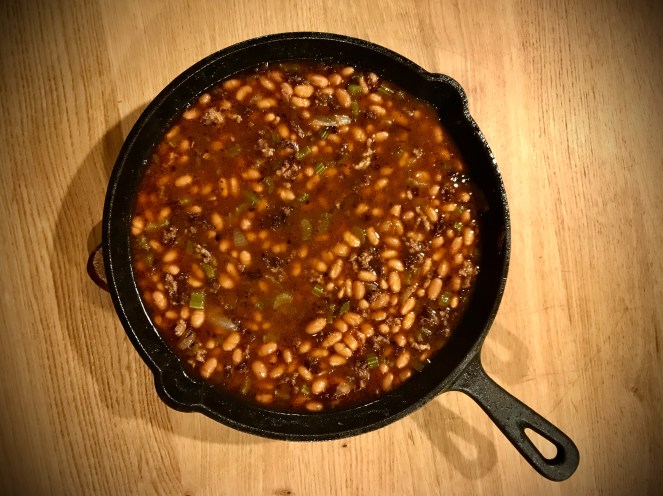
After a few more bites, my husband said – not once but twice – “Man that’s GOOD!”. Then he put to words what I was thinking “I didn’t expect the flavor profile to be so complex.” And it was. Far, far more than just a can of humble baked beans this recipe had a wonderfully rich beef flavor that was surprising given the amount of beef (¾ of a pound) that was included. All of the other ingredients worked in perfect harmony to create a dish that was well balanced and robust. The texture was great, too. I cooked my dish in a cast iron pan and the crumbled beef got a wee bit crispy before the 10 minute cook time was up. Of course, I’m not sure if that was supposed to happen (as the instructions don’t elaborate) or if it was a happy accident. But it was delicious and I will crisp the beef again the next time I make it. Despite the beef to bean ratio being so heavily skewed towards the beans, there was little bit of beef in every bite. 

Beyond that, this was another superb weeknight dinner for a business housekeeper. Start to finish, I had this dish on the table in just 26 minutes. Like Swiss Cheese Pie from the prior evening, Baked Bean and Hamburger Savory was extraordinarily easy to make, a speedy weeknight super, easy on the budget, and most importantly, delicious. 

The beans added a nice heft to this dish, making it filling without being heavy. It was a great meal on a chilly Autumn evening. I served this with bread and butter and the last of the applesauce from the night before. 

The recipe serves 4. When I spotted The Mister’s roving eye scanning the kitchen to see if there was more, I knew that there would be no leftovers and that is the best endorsement. I will definitely be making this again and hope you give it a try yourself!

Baked Bean and Hamburger Savory

  • Servings: 4
  • Difficulty: easy
  • Print

Ingredients

  • 2 tablesp. fat or salad oil
  • ½ c. sliced onions
  • ⅔ c. diced celery
  • ½ lb chuck beef, ground
  • 2 ⅔ c. baked beans or cooked kidney beans
  • 2 teasp. Worcestershire sauce
  • ¾ teasp. salt
  • ¾ teasp. powdered sage
  • ¾ c. water or canned tomato juice

Directions


Heat the fat in a skillet. Then add the onions, celery, and beef, and cook, uncovered about 10 min. Add rest of ingredients; heat thoroughly. Serves 4.


For this recipe, I used rendered bacon fat as my fat/oil, original recipe commercially prepared baked beans, and tomato juice. I substituted the sage for dried thyme, as my Maman does not like sage.

Bon appetit!

1944 · main dishes · vintage recipes

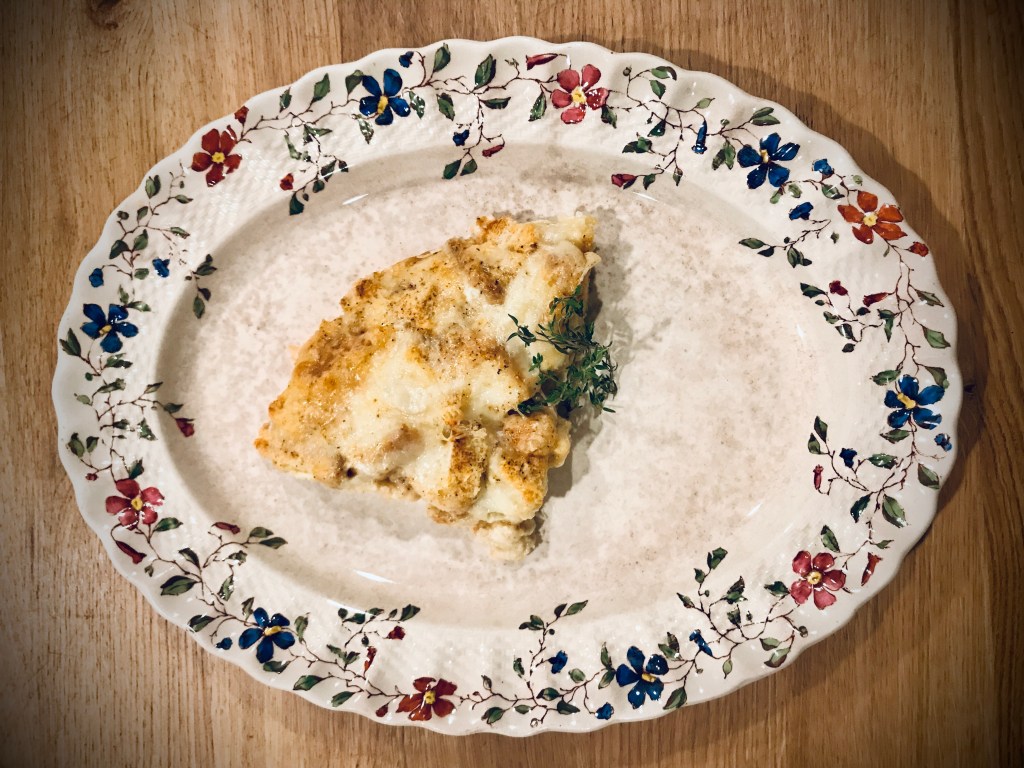
Vintage Recipe: Swiss Cheese Pie

After months of haphazardly flipping through my 1944 Good Housekeeping Cookbook, I finally began my vintage culinary journey and started cooking. 

For my first foray, I intentionally chose a recipe that was quick, easy, and contained ingredients that are still readily available. I know from my aforementioned haphazard flipping that I am going to have my work cut out for me finding more than a few ingredients in the cookbook. Bottled thick meat sauce? India relish? Suckling pig? Best not to set oneself up for failure at the get go, I reckoned. 

Beyond that, I am what the cookbook so graciously calls a “Business Housekeeper”, meaning I work outside the home and am tasked with “preparing dinner without delay after (I) get home from the office at night.” I made this recipe on a weeknight and was able to have it in the oven in just 17 minutes. I imagine this recipe was popular in 1944, when women held a full third of all manufacturing jobs in the USA and the female labor force had increased by 50% over the pre-war years. If Rosie the Riveter can work in a factory all day and get a hot meal on the table at night, so can I. We can do it, ladies! Grandma didn’t have DoorDash, after all. 

So, Swiss Cheese Pie. I’ve already mentioned the speed in which I prepared this dish but what are some of the other highlights? It was relatively inexpensive for one, and contained just eight ingredients, half of which were seasonings that are staples in a well-stocked store cupboard. The other four ingredients – bread, milk, cheese, and eggs – are all what I consider to be multi-purpose ingredients and will provide the basis for other meals later in the week. 

Of course, a speedy and budget friendly meal is only worthwhile if it’s tasty. The verdict? The Mister gave it 4.5/5 stars. My Maman gave it 5/5. What did I think? I enjoyed it. It was a light dish with an almost custard-like or souffle-esque consistency and most definitely lighter than a standard quiche. Much to my delight the predominant flavor was, in fact, the swiss cheese. I find in many modern recipes that there are so many competing herbs, spices, and other ingredients that the dishes end up tasting like…well, not much of anything specific. But with this Swiss Cheese Pie, the cheese shone through in a perfectly balanced way. I served the pie with a simple salad of mixed greens, cucumber, and tomato tossed in French dressing and a side of applesauce. It was the perfect weeknight supper – hot, fast, and filling with one slice leftover for luncheon the next day. 

I would definitely make this again and hope you give it a try yourself.

Swiss Cheese Pie

  • Servings: 4-5
  • Difficulty: easy
  • Print

Ingredients

  • 1 qt bread or toast cubes (6 or 7 slices)
  • ½ lb grated processed Swiss cheese (2c.)
  • 2 eggs, beaten
  • ½ tsp salt
  • ½ tsp paprika
  • ¼ tsp dry or prepared mustard
  • ⅛ tsp pepper
  • 1 ½ c. bottled milk or ¾ c. evaporated milk and ¾ c. water

Directions

Place bread cubes in an ungreased 9” oven glass pie plate or shallow baking dish. Cover with the grated cheese. Combine beaten eggs, seasonings, and milk, and pour over the cheese and bread. Bake in a moderate oven of 350° F. for 30 min., or until puffed and lightly browned. Serves 4-5.

I used 6 slices of generic, store-brand white sandwich bread, standard Swiss cheese (as I don’t believe processed Swiss cheese is still manufactured – at least I could not locate it), dry mustard, and whole milk. I baked my pie for about 35 minutes.

Suggested Variations: If you have a miniscule amount of leftover ham, it would make a lovely addition to this pie if diced very small. Canned mushrooms would also work nicely – just be sure to drain them very well so as not to throw off the bread to liquid ratio.

Bon appetit!

1944

Let’s Travel Back in Time

There is a song (the title of which I will not name here because, frankly, it’s quite vulgar), popular in the late 1990’s, that opens with the line “I hate the world today”. 

So many times I feel that way and then quickly admonish myself. Hate, as our mothers all told us, is a strong word. But then again, the Oxford English dictionary defines hate as:

“To feel intense or passionate dislike.”

Passionate dislike. Yes, that’s exactly how I feel about the 21st century and its third decade. And passionate dislike has a much more elegant and ladylike ring to it than hate. Talk about vulgar.

I digress.

I’ve always felt I was born in the wrong era. I don’t particularly enjoy today’s fashion, music, movies, or much else to be frank. I have always been fascinated by the heyday of my grandparents’ generation, the exquisitely named Greatest Generation – specifically the 1940’s through the early 1960’s. 

Now, before I go any further please allow me a moment to state emphatically that I am fully aware that the era I just mentioned was not without tribulations. I do not romanticize it. The world during that period was filled with unbelievable turmoil, sadness, and despair. But, of course, today in many ways is no different. Same song, different tune. 

I am also aware that the modern society I so passionately dislike does have its advantages. 80 years ago, sitting at a desk, writing, and then sending that missive out around the world INSTANTLY was entirely impossible. The wealth of knowledge at our fingertips now is unprecedented and easily attainable for nearly anyone who has a passion to learn. 

That all being said, I am an old soul and always have been. I am also a student of history and believe that the lessons to be learned from the “good old days” have immense value. 

So, specifically, what inspired this blog?

A few months back I was browsing in a local antique store and happened upon a cookbook. The Good Housekeeping Cookbook, 7th revision, published in 1944 and in excellent condition. Like a moth to a flame, I was drawn to it and started flipping through it, absolutely riveted. Instantly, I thought of the cookbook I learned to cook with – my Maman’s battered and well-used copy of Betty Crocker’s New Picture Cookbook from 1961. 

Filled not with just recipes, but also practical advice on homemaking, marketing, meal planning, and more, the Good Housekeeping Cookbook offered a wealth of knowledge and insight into wartime home life in the United States. And with our modern economy in shambles and inflation through the roof, who couldn’t use a few tips on how to stretch a grocery budget while still living an elegant and well-curated life? 

So of course, I purchased the book. Took it home and stored it safely in my antique secretary (also from the 1940’s). And there it sat for a few months, mostly untouched but for a few peeks here and there coupled with several fleeting thoughts of how I really should select a recipe and give it a go. 

Then, my Aunt arrived for a visit. Said Aunt is an excellent cook. My husband much prefers her cooking to anything I make. And during her visit she got out a cookbook filled with recipes her mother (my grandmother) used to make. They were a big hit. After her departure, my husband looked through the cookbook and requested I make a dish that was one of my grandpa’s favorites: Spaghetti-Meatloaf.

I’d never had it. My Maman never made it, as she never liked it. So, I gathered the ingredients, put on my apron, and started cooking. It was delicious. It was inexpensive, nutritionally balanced, and relatively easy to make.  Most importantly, my leftover averse Mister happily ate it again the next night. Even my Maman liked it. 

Well, the lightbulb went off. I’ve very much felt lately like everything I cook using contemporary recipes and modern ingredients ends up being absolute rubbish, yet this old recipe turned out great. So I decided the day had to come to see what 1944’s Good Housekeeping could teach me. I thought it would be fun to cook my way through this vintage tome and share my experiences with you. 

And, as so many thoughts do, the idea got bigger and I thought it would do my old-lady soul good to write about all things from the decades that have been a lifelong fascination. 

The next January 1st we see will usher in the year 2024. That will be 80 years since my Good Housekeeping Cookbook was published. 80 years, in the context of humanity, is not a terribly long time. And yet the changes we’ve experienced have dramatically shifted life in the West, some for the better and some – many – for the worse. 

Consider this your invitation to come time-traveling with me. Back to a day when “farm to table” wasn’t a trendy catchphrase, but was an accurate description of how folks actually ate. Back to a day when the radio didn’t have to bleep out half the lyrics in a song. Back to a day when grocery shopping in your pajamas wasn’t even a consideration, let alone the norm. Back to a day when holes in your clothes were patched, not created intentionally in the name of fashion. Back to a day when “ladies and gentlemen” wasn’t just a way to start a speech but an ideal for how to behave. Back to a day when certain subjects simply weren’t discussed in polite company. Back to a day when respect, faith, community, and loyalty were the bedrocks of society. Back to the good old days. 

Back to 1944…